From Notebook to Dashboard: What Going Digital Actually Looks Like
"Going digital" sounds like a boardroom project with consultants and a budget you don't have. In reality it's five small stages, and you only ever take the next one.
"Going digital" sounds like something that happens in a boardroom, with consultants and a budget you don't have. In reality, for most Nigerian businesses, it looks like this: you stop writing sales in a notebook, and start seeing them on a screen.
That's it. That's the transformation. And everything else follows from it.
Stage 1: The notebook
You know this stage well. Sales in a book. Customer numbers in your phone. Stock counted by looking at the shelf. Invoices written by hand or typed one at a time. It works until it doesn't.
The limitation isn't the notebook. It's that the notebook can only tell you what happened, and only if you can find the right page. It can't tell you what's happening, what's changing, or what to do about it.
Stage 2: The scattered tools
Most businesses stumble into this stage by accident. Sales are in WhatsApp. Records are in Excel. Receipts are in a folder somewhere. Customer details are split between a phone and a notebook.
This feels like progress, and it is but it creates a new problem. The information exists, but it's scattered. Answering a simple question like "which product made us the most money last month?" now means opening four things and hoping they agree.
Stage 3: The single source of truth
This is where it changes. Your sales, customers, and stock live in one place. Not a fancy enterprise system, just one system that everything flows into.
Suddenly your business can answer questions about itself. Not from memory. Not from guesswork. From data.
Stage 4: The dashboard
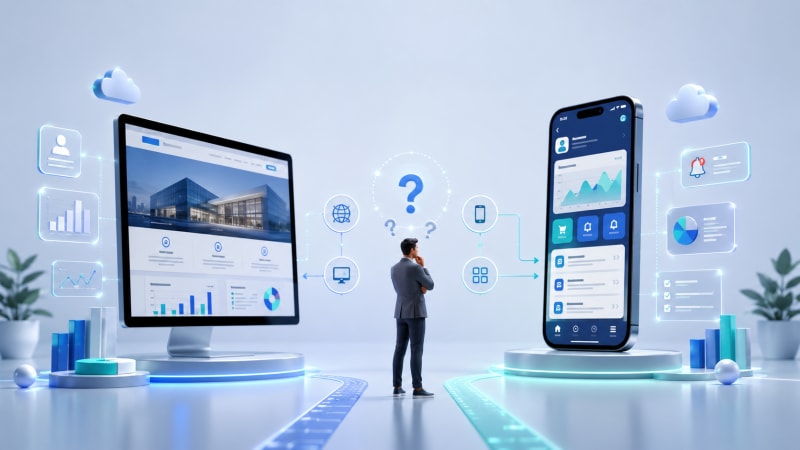
Now you open one screen in the morning and see what's actually happening. What sold yesterday. Which customer hasn't ordered in a while. Which product is quietly your best. Which one you keep restocking but nobody buys.
This is the moment most business owners describe as the real shift, not because the technology is impressive, but because for the first time, they can see their own business clearly.
Stage 5: It starts running itself
Once your data is in one place, automation becomes possible. Invoice reminders send themselves. Low stock flags itself. Customers get followed up automatically. Reports build themselves overnight.
The business begins doing things without you having to remember them. This is the stage where growth stops being limited by how much you personally can hold in your head.
What this actually costs
Less than most owners fear, and far less than staying where you are. You don't do all five stages at once. You take the next step and each step pays for the one after it.
The mistake is thinking you need to leap from notebook to dashboard in one move. You don't. You just need to stop standing still.
Frequently asked questions
What does going digital actually look like for a Nigerian business?
It usually happens in five stages: records in a notebook, information scattered across WhatsApp and Excel, everything brought into one system, a dashboard that shows what is happening, and finally automation that handles routine tasks for you.
Do I need to go digital all at once?
No. You take one step at a time, and each step pays for the next. The mistake is trying to jump from notebook to dashboard in one move.
What is a business dashboard?
A single screen that shows what is actually happening in your business, such as what sold yesterday, which customers have not ordered in a while, and which products are your best or slowest sellers.
Is going digital expensive?
Less than most owners fear, and far less than staying where you are. Because you only take the next stage when you need it, the cost is spread out and each step earns its keep.
The bottom line
Going digital isn't a project with a start and an end. It's a series of small decisions to stop guessing and start seeing. And the businesses that make those decisions first don't just grow faster, they grow with far less stress, because they finally know what's actually going on. Dashboards and single systems like this are what we build as business software.
Not sure which stage you're on, or what your next step should be? Loukama Tech Solutions builds dashboards, custom systems, and automation for businesses in Nigeria and beyond one practical step at a time.