Abacus Math Practice at Home: A 15-Minute Daily Routine for Children Aged 5–12
The app doesn't fail because your child dislikes the abacus. It fails because practice never finds a place in a real, busy week. Here's a 15-minute routine that does.
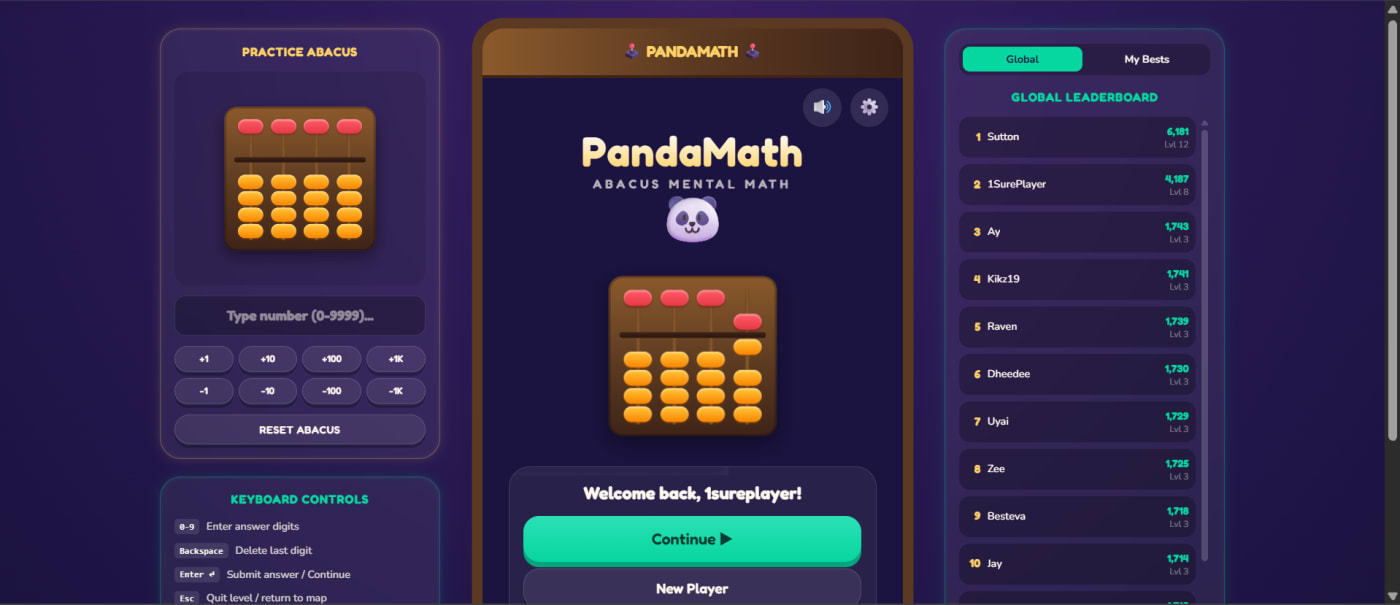
You buy an abacus app for your child. For the first few days, they are excited. Then school gets busy, homework takes longer than expected, someone has an evening lesson, the power goes out, or you simply get home late. Before you know it, the app has been sitting there untouched.
The problem usually isn't that the child doesn't like the abacus. The problem is getting practice to fit into everyday family life. The good news is that it doesn't need to take an hour. A short, regular session can be enough to keep the skill moving forward. If you have about 15 minutes, here's a simple routine you can use at home.
The rule: keep it short and keep it regular
Don't worry about making every practice session a big lesson. For a young child, ten or fifteen focused minutes is often easier to sustain than a long session once a week. The goal is to make abacus practice something your child expects to do, rather than another piece of homework they have to survive.
Six short sessions during the week are perfectly reasonable. You can leave one day completely free.
The 15-minute routine
Minutes 1 to 3 — start with something easy. Begin with questions your child already knows how to solve. This isn't wasted time. It gives them a chance to get their fingers moving, remember the bead positions and settle into the activity. If your five-year-old is still learning basic numbers, that might mean simply setting numbers on the abacus. An older child might start with a few addition or subtraction problems they can solve comfortably. The important thing is not to start the session with the hardest questions.
Minutes 4 to 10 — work at their current level. Give your child questions that require some thought but are still within reach. If they are getting almost everything wrong, the questions are probably too difficult. If they are answering everything immediately, they may be ready for a little more challenge. You don't need to find the perfect difficulty every day, just watch how your child is responding and adjust. And don't turn mistakes into a lecture — let them work through it and try again. The aim is to help them become more comfortable with numbers, not to make them afraid of getting one wrong.
Minutes 11 to 13 — make it a game. Now add a little speed. Set a two-minute timer and see how many questions your child can complete correctly. Don't make speed the only measure of progress — a child who answers ten questions correctly in two minutes is doing better than one who rushes through twenty and gets half of them wrong. You can also turn this into a small challenge: "Can you beat yesterday's score?" That gives the child something to aim for without making the parent the person constantly saying, "Faster!"
Minutes 14 to 15 — record the result and finish. Write down the score. That's it. You don't need a complicated spreadsheet, a notebook with the date, number of questions and number correct is enough. Then stop. If your child is still enjoying it, that's actually a good place to finish. You want tomorrow's practice to feel like something they can handle, not something they have to endure.
When should you practise?
The best time is the time your family can repeat.
After homework can work well because the child is already sitting down and in a study mindset. The catch is that homework can sometimes leave them exhausted — if they have just spent an hour struggling with a difficult assignment, forcing another maths session may do more harm than good.
Before school suits children who concentrate better in the morning. If your child wakes up early and your mornings aren't already a race to get everyone dressed, fed and out of the house, this can be a good option. If mornings are chaotic, don't force it.
During traffic or while waiting can be useful for Nigerian families who spend a lot of time on the road, if the child has a phone or tablet and the app works offline. It turns otherwise wasted time into a few minutes of practice. Just don't make every journey a maths lesson — sometimes children should simply look out of the window and talk to you.
After dinner gives a predictable evening slot for families who prefer to finish everything else first. Just avoid pushing difficult practice too close to bedtime. A tired child isn't going to get much from it.
Give yourself one day off
You don't have to practise seven days a week. Pick one day when there is no abacus practice. Maybe that's Sunday. Maybe it's Saturday. It depends on your family's schedule.
Having a planned break also makes it easier to deal with the occasional missed day. If Wednesday disappears because of schoolwork, traffic or a family commitment, you simply continue on Thursday. No guilt. No restarting the programme.
What progress should you look for?
Don't use a calendar to decide when your child should be at a particular level. Children learn at different speeds, and their progress depends on their age, starting point and the method they're being taught. Instead, watch for changes in what they can do.
At the beginning, they rely heavily on the physical abacus and may count the beads deliberately. As they become comfortable, they start recognising bead patterns and number combinations without having to count every bead. Later, you may notice them moving their fingers as though an abacus is in front of them, even when the physical abacus isn't there.
That mental picture is an important part of abacus-based mental arithmetic. The physical abacus is gradually becoming something the child can visualise rather than something they always need to touch. The speed comes with practice. Don't try to force it.
What if you don't have an app?
You don't actually need one. A physical abacus, some questions and a notebook are enough to get started. The challenge is consistency — someone has to prepare the questions, decide whether they are too easy or too difficult, keep track of previous scores and figure out what the child should practise next. That's manageable for a week. Doing it every day for months is where it becomes tiring.
That's one of the reasons we built Panda Math. Panda Math gives the child a structured practice session, adjusts the difficulty as they work and keeps their results so you don't have to manage everything in a notebook. It runs in your phone's browser, so there is nothing complicated to install. ₦4,000 once. No subscription.
Frequently asked questions
How long should my child practise abacus at home each day?
About 10 to 15 minutes. A short, focused session most days of the week works better than one long session a week, and six days with one day off is perfectly reasonable.
What is a good 15-minute abacus practice routine?
Spend the first 3 minutes on easy warm-up questions, minutes 4 to 10 on questions at your child's current level, minutes 11 to 13 on a short timed challenge, and the last 2 minutes writing down the score and finishing.
What is the best time of day for abacus practice?
Whatever time your family can repeat. After homework, before school, after dinner or while waiting can all work. Avoid times when your child is already exhausted or close to bedtime.
Do I need an app to practise the abacus method at home?
No. A physical abacus, a set of questions and a notebook are enough to start. An app such as Panda Math helps with consistency by preparing questions, adjusting difficulty and keeping track of results for you.
The bottom line
Don't wait for the perfect schedule. Pick a time that your family can realistically repeat, put 15 minutes on the clock and start. If your child enjoys it, you've already solved half the problem.
Start practising with Panda Math today and turn 15 minutes into a habit your child looks forward to.


