What Is the Abacus Method? And Why More Nigerian Parents Are Choosing It to Improve Their Child's Mental Maths
If your child still counts on their fingers, they are not behind, they are just being taught to follow steps instead of understand numbers. Here's how the abacus method changes that.
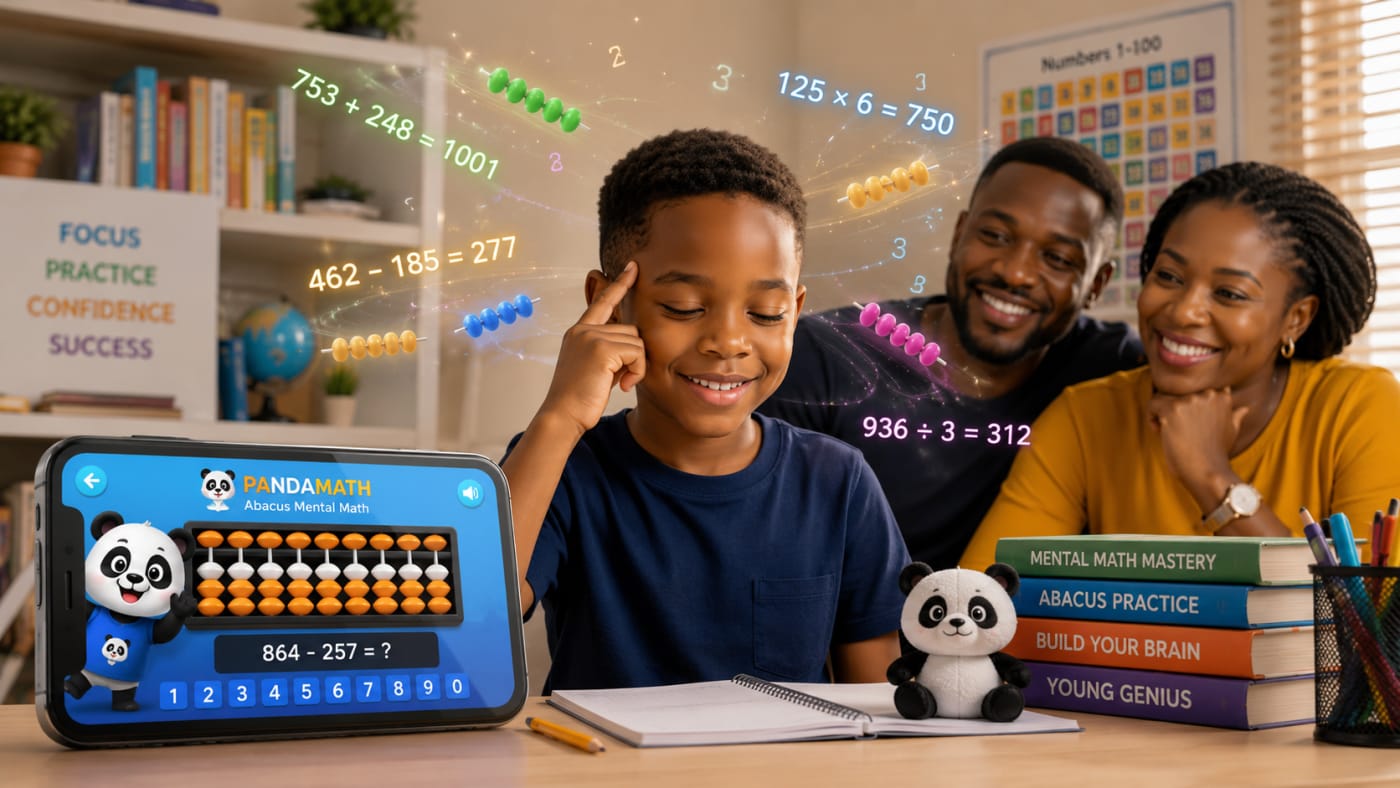
If you have ever watched your child use their fingers to solve something like 47 + 38, don't worry, it is more common than you think. Most schools teach maths the traditional way: write the numbers, carry one and check the answer. There's nothing wrong with that approach, but many children become dependent on following steps instead of truly understanding how numbers work.
That's why more parents are discovering the abacus method. Instead of teaching children to memorise calculations, it helps them develop a way of thinking about numbers. The result is better mental maths, faster calculations and for many children, a lot more confidence whenever numbers are involved.
So, what exactly is the abacus method?
An abacus is a simple counting frame made up of rows of beads that represent units, tens, hundreds, and so on. Although it's thousands of years old, it is still one of the most effective tools for teaching arithmetic.
The interesting part isn't the beads themselves. They are simply the starting point. As children progress, they gradually stop depending on the physical abacus and begin solving problems mentally. Most abacus learning follows three stages.
- Learning with a real abacus, children begin by moving the beads themselves. This helps them see how numbers are formed instead of simply memorising rules.
- Visualising the abacus after enough practice, children no longer need the physical frame. They begin picturing the abacus in their minds and mentally move the beads while solving questions.
- Mental calculation — eventually, the image of the abacus becomes automatic. Instead of imagining every bead, children simply recognise number patterns and arrive at answers surprisingly quickly.
This is why many trained children can solve large calculations in seconds, not because they are naturally gifted, but because they have developed strong number sense.
Why does the abacus method work so well?
One of the biggest reasons children struggle with maths is that numbers often feel abstract. The abacus changes that. Instead of looking at symbols on paper, children can actually see and understand how numbers relate to one another. Concepts like making ten or breaking larger numbers into smaller parts become much easier to grasp.
Another benefit is concentration. Abacus practice requires children to focus for short periods, usually around 10 to 15 minutes at a time. Many parents notice improvements in attention span even before they see better maths results.
It also reduces dependence on calculators. A child who is comfortable calculating mentally is far less likely to panic during classroom exercises, exams, or competitions where calculators aren't allowed.
Perhaps the biggest advantage is that children can start early, often from around age five. Building confidence before maths becomes difficult helps prevent the fear and frustration many older students experience.
Why are more Nigerian parents embracing the abacus method?
Parents know how competitive school entrance examinations have become. Whether it's Common Entrance, scholarship exams, or secondary school placement tests, speed and accuracy matter. Children who can calculate mentally often have an advantage.
Cost is another factor. While there are excellent abacus training centres in cities like Lagos, Abuja, and Port Harcourt, attending weekly classes isn't always convenient. Between tuition fees, transportation, and finding time after school, it can quickly become expensive.
Technology has also made learning much easier. Today, most families already have access to a smartphone. Instead of waiting for one lesson every week, children can practise for just a few minutes each day at home, building consistency without disrupting the family's schedule.
Choosing the right abacus learning app
Not every maths app teaches the abacus method properly. When comparing options, here are a few things worth looking for:
- A clear learning path that takes children from physical practice to mental calculation.
- Short daily lessons that fit naturally into a child's routine.
- Smooth performance on everyday Android phones.
- Low data usage.
- A simple pricing model without recurring monthly subscriptions.
The best app isn't necessarily the one with the most animations. It's the one your child will actually keep using consistently.
Why we created Panda Math
When we spoke with parents, we kept hearing the same challenge. They wanted their children to learn the abacus method, but weekly classes didn't always fit their schedule or budget. That's what inspired us to build Panda Math.
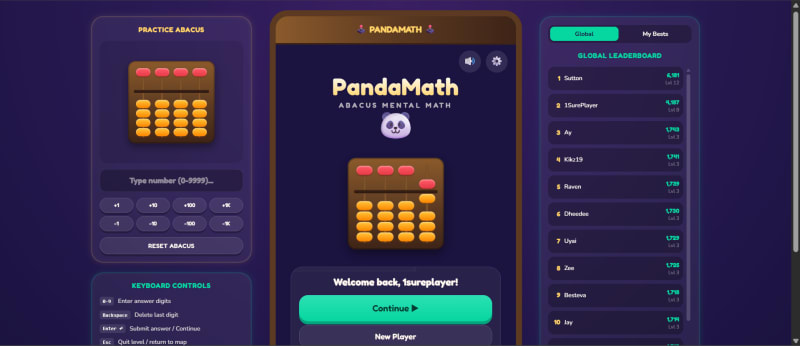
Panda Math is designed specifically for Nigerian families. It runs directly in your phone's browser, so there's no large download or complicated installation. Children can complete short practice sessions every day, making learning easier to maintain.
Instead of charging a monthly subscription, Panda Math is available for a one-time payment of ₦4,000. Payments are securely processed through Paystack, so your payment information is handled using their trusted payment system.
The bottom line
The abacus method doesn't make children faster at maths by drilling them harder. It makes numbers make sense and a child who understands numbers stops being afraid of them. A few minutes of practice each day is enough to build that confidence for life.
Ready to help your child become more confident with maths? Try Panda Math today and see how just a few minutes of daily practice can make a lasting difference.